
Jefe Denning: A Beacon In the Storm
Published on Mar 3 2026
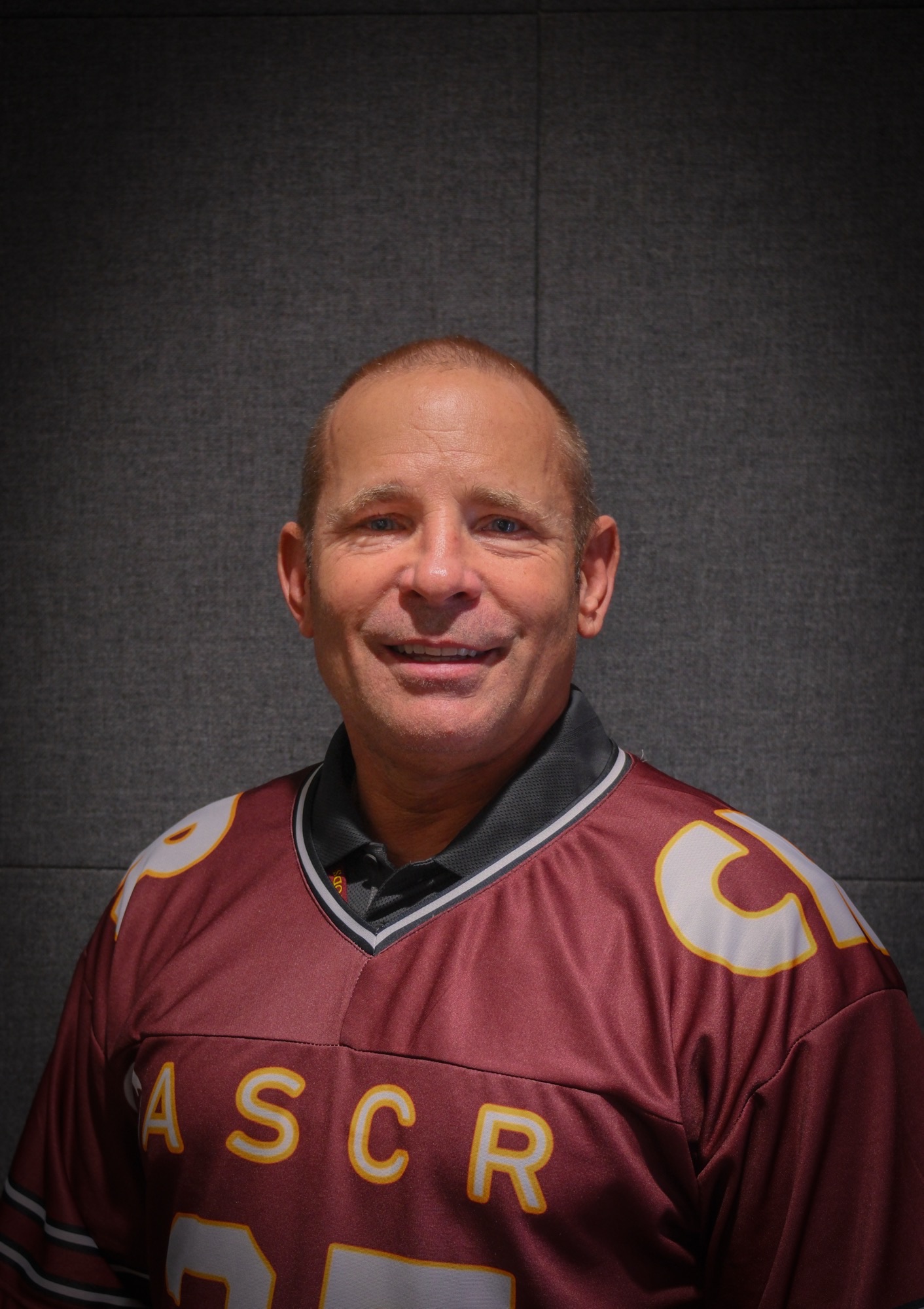 Addiction bottoms are different for everyone.
Where Jefe “Hefe” Denning found his wasn’t the moment his fourteen-year-old daughter at the time, Skyler, took him by the hands and said, “Dad, I love you, but I can’t watch you destroy yourself anymore.”
For Jefe, his bottom came in pieces, disguised as waves, sometimes gentle, sometimes violent, each one pulling him under in ways that felt as deep and consuming as a father’s love.
There are moments in life that feel scripted by something greater than us. Call it what you want.
Call it grace.
Call it fate.
Call it divine intervention.
But whatever name you give it, it leaves a mark on the soul that cannot be erased. These moments demand our attention, even when it is so much easier to look away. Moments when we look at our reflection and wonder how it got so bad so fast.
“It doesn’t happen all at once,” Jefe reflects. “It’s one decision, then another, and suddenly you’re somewhere you never thought you’d be.”
When Jefe comes into my office for the interview, he carries a light with him, a light he shows in the way he speaks, in his stories he shares, and in the moments when emotion catches deep within his vocal chords. Full of gratitude. And pain. And love. And loss. But mostly in healing.
Born in Long Beach and raised across the West, from Spokane to Arizona and eventually California, Jefe’s life has been marked by movement. Opportunity, love, heartbreak, reinvention. For years, Sacramento was home. He built a life there. A marriage. A house. Dreams of children.
When those dreams didn’t unfold as planned, he pivoted.
After a divorce and years of trying to start a family, Jefe unexpectedly became a father. His daughter, Skyler, arrived at a time when he least expected it, but exactly when he needed her.
A blessing that arrived in a way he didn’t anticipate.
But not all chapters were light.
When COVID-19 hit, the repossession company Jefe had worked with for two decades collapsed.
Financial instability turned into housing instability.
Slowly, almost subtly at first, he found himself living out of his car along the Sacramento River.
What began as survival became something far darker. Addiction tightened its grip.
Like addiction, he describes homelessness not as a single event, but a succession of scenes.
He was assaulted.
Robbed.
Beaten.
Yet even in chaos, he found unexpected humanity in a woman named Daisy.
She rolled up in a battered Volvo with a loud muffler: she wanted to make sure he was okay. Daisy had survived years on the streets herself. She understood the unspoken rules of that world, and she saw something in Jefe that he could not see in himself.
“You’re not supposed to be here,” she told him. “You’re not going to stay here.”
For eighteen months they were inseparable, two people navigating darkness together. Daisy was fiercely intelligent, perceptive beyond her years, and carried deep wounds from a traumatic childhood. She dreamed of earning her GED and becoming a drug counselor someday. She pushed Jefe toward recovery even while wrestling her own demons.
When he finally left Sacramento to visit his brother and consider treatment, Daisy encouraged him to go. She believed in his ability to escape the cycle, even if she wasn’t sure she could escape it herself.
He returned to Sacramento briefly to say goodbye.
Weeks later, she died from a fentanyl overdose.
Her death shattered him. It also became the bend in the road.
Not long after that, Jefe was involved in a devastating car accident. Ejected forward when the seat tore loose, he suffered severe injuries, including a broken orbital bone.
He flatlined en route to the hospital.
Paramedics revived him.
In the chaos, he arrived as a John Doe.
Jefe doesn’t frame it as luck.
He calls it grace.
Surviving that accident forced a reckoning.
He had lost Daisy.
He had nearly lost his own life.
And the daughter who once held his hands and told him she couldn’t watch him destroy himself anymore was still waiting for her father to come back.
Recovery followed. Slowly. Imperfectly. It unfolded with moments of peace and so many “one day at a times.”
After rehab, his doctor highly recommended College of the Redwoods as a way to begin again.
So, Jefe enrolled in classes.
That was two years ago.
Now, he’s studying social work and working toward his addiction studies certificate, with long-term goals of continuing on for a master’s degree to become a licensed clinical social worker. With two major players in his education at CR, Carolyn Perkins and Matt McKindley, he credits both for being instrumental in his growth both in the classroom and personally.
Today, Jefe is fully immersed in campus life.
He’s an ASCR (Associated Students of College of the Redwoods) Senator and a Residential Assistant in the dorms, working directly with students and helping build community.
A campus club that has helped Jefe tremendously is the System-Impacted Student Union (SISU), a student organization dedicated to supporting formerly incarcerated and justice-impacted students as they pursue their education at CR.
He believes that even at rock bottom, there is still a path upward, and in many ways, CR represents the healing, structure, accountability, and opportunity that leads to the path upward.
He’s starting to rebuild his relationship with his daughter, Skyler.
There is a lighthouse near where he once lived on the streets, its beam sweeping across the darkness in steady rhythm. Daisy used to tell him he was like that light, meant to guide, not disappear.
Now, he carries that image with him.
Not as a memory of what he lost, but as a reminder of who Jefe Denning was, and most importantly, who he’s becoming: a beacon in the storm.